



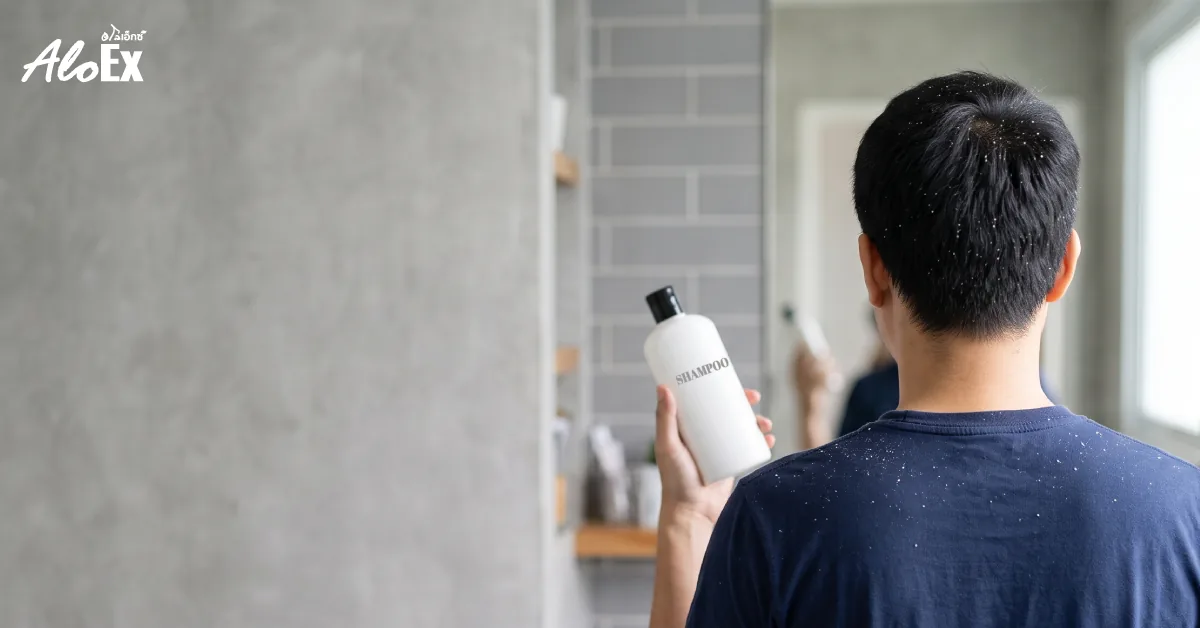
Dandruff is not only a grooming problem. Left alone, those white flakes on your shoulders can turn into an inflamed scalp and, in time, hair fall. Many people keep switching anti-dandruff shampoos — a brand works at first, then a few weeks later the flakes are back.
This article digs into the real root of the problem: what actually causes dandruff, why some people get it chronically, how much age and sex have to do with it, and how to choose an anti-dandruff shampoo and a scalp-care routine that genuinely work — so you can get a clean, healthy, flake-free scalp back.
What is dandruff? The real causes behind it

Dandruff is scalp skin shedding faster than normal until it clumps into white or yellowish flakes
Dandruff is the condition in which skin cells on the scalp shed faster than normal until they clump together into white or yellowish flakes. The skin-renewal cycle loses its balance for a combination of reasons:
1. Malassezia yeast — the main culprit on your scalp
Everyone's scalp carries a natural yeast called Malassezia, which lives by feeding on the oil and sebum on the scalp. When the scalp loses its balance and produces too much oil, that yeast multiplies beyond its normal level, the scalp microbiome is thrown off, and the scalp becomes irritated. The body responds by accelerating skin-cell turnover — and the result is dandruff flakes.
2. Excess oil and a broken scalp barrier
When the sebaceous glands on the scalp produce too much oil — whether from hormones, hot and humid weather, or personal habits — that excess oil becomes a perfect food source for Malassezia. The scalp becomes inflamed and the scalp barrier weakens, which is when dandruff appears.
3. Habits and external factors that trigger a flare-up
- Washing with very hot water: strips away too much of the oil that keeps the scalp supple, leaving it dry and irritated.
- Washing "too clean": a sulfate-based shampoo leaves the scalp squeaky clean but destroys its moisture balance, so the sebaceous glands overproduce oil to compensate.
- Reactions to chemicals: preservatives, or styling products that were not rinsed out properly.
- Stress and too little sleep: both affect the immune system and how the sebaceous glands behave.
Men's dandruff vs women's — is there a difference? And does age matter?
If scalp oil is the main driver of dandruff, why do some people wash their hair every day and still have it, while others never do?
Because biological factors matter just as much as habits when it comes to how much oil a scalp makes — skin structure, sex hormones and the changes that come with age all determine how oily the scalp gets, and how strong the barrier is at resisting irritation from Malassezia.
Is men's dandruff different from women's?
Whether it appears on a man's scalp or a woman's, the cause is identical: excess oil + Malassezia overgrowth + inflammation and irritation, which together speed up skin-cell turnover until it sheds as flakes. The difference is that men's scalps get oily more easily than women's, so men develop dandruff more readily and more severely.
Why do men get oilier scalps and worse dandruff?
Men's scalps are not oilier because men are less clean — even when a man washes his hair as often as a woman does, his scalp still gets oily, inflames easily and produces more dandruff. Three physiological factors explain it:
- Sex hormones (androgen effect): men have far higher androgen and testosterone levels than women, and those hormones drive the sebaceous glands to work hard and produce more oil than normal. Women, meanwhile, have estrogen helping to hold their moisture balance, so their scalps take longer to get oily.
- Larger sebaceous glands: the sebaceous glands on a man's scalp tend to be bigger and the follicle openings wider. Bigger glands push out a great deal more oil — a rich food supply that lets Malassezia grow fast.
- A weaker, more inflammation-prone barrier: men's scalps have lower levels of ceramides, the skin's natural moisturising factor, so the barrier loses water easily. When the skin underneath dries out, the body rushes to produce more oil to coat and compensate — and a weakened barrier means redness, itching, inflammation and flaking come on more easily than they would for a woman facing the same trigger.
Beyond biology, men's lifestyles tend to involve more sweating, and men tend to favour styling products that trap oil and are hard to wash out — wax, pomade, hairspray. Clean those out poorly and the residue builds up, trapping more oil and grime, and pushing dandruff into a chronic problem that is harder to treat.
What age does dandruff start? Oil risk through the decades
Besides sex, age is the other factor that sets how oily a scalp is, tracking hormone levels through life:
- Teens to working age (20–40) — peak dandruff years, and it can progress to seb derm: hormones are at full output and the sebaceous glands make the most oil of any life stage, so the risk of dandruff is very high, and it can develop into seborrheic dermatitis.
- Middle age and older (50+) — dry dandruff instead: as you age, hormone activity and sebaceous gland output fall, the scalp gets less oily, and the oil-and-yeast form of dandruff drops away with it. What can appear instead is "dry dandruff", caused by ageing skin cells and a scalp that loses moisture easily, until it dries out and peels off in sheets like cracked dry skin.
Not every white flake on a scalp is the same thing. Read how to tell oily dandruff, dry dandruff, seb-derm and psoriasis apart, so the shampoo you pick matches the problem you actually have.
Why is chronic dandruff so hard to get rid of for good?
Plenty of people have an on-again, off-again relationship with dandruff that becomes chronic dandruff. There are four main reasons:
- Rebound effect from a shampoo that is too harsh: using a shampoo with aggressive sulfate cleansers, or an anti-dandruff active, for too long strips away every trace of natural oil. The body reads that as a dry scalp and produces even more oil to replace it — an endless loop of oil and yeast.
- A scalp barrier that has been weak or damaged for a long time: once the outer skin layer is damaged by chemicals, scratching or heat, the mechanisms that build new skin cells and the ceramides that hold moisture cannot keep up. The microbiome loses its balance and the scalp loses its natural defences — a little humidity or sweat is all it takes for dandruff to flare straight back.
- Yeast building a protective biofilm: when the scalp is very oily, or styling product residue is left behind, the yeast clusters together and builds a mucus-like layer around itself to survive. Wash in a hurry, or rinse a shampoo out too quickly — especially a medicated shampoo or one with strong actives — and the surviving yeast thickens that shield further, so actives in an ordinary shampoo cannot penetrate deep enough to deal with it. The yeast survives, and the dandruff keeps flaring.
- Accumulated stress and hormone swings: stress and poor sleep raise cortisol, which directly accelerates the sebaceous glands and lowers the skin's immunity.

Chronic dandruff usually is not about being unclean — it is about a scalp balance that has broken down over time
Can dandruff be cured for good?
The answer is no — dandruff cannot be cured permanently in a way that guarantees it will never come back. But it can be kept under control long-term so that it does not return.
Why dandruff cannot be permanently cured
- Malassezia is normal flora — a resident microorganism living in the follicles and sebaceous glands of every human being. Even after care has cleared every flake, the yeast is still there, ready to grow again the moment conditions on the scalp allow it.
- The body produces oil as a matter of course. As long as it produces hormones, the sebaceous glands will keep secreting oil to nourish the skin — the yeast's main food supply. There is no permanent off switch for scalp oil.
- External triggers can happen at any time: hot humid weather, stress, too little sleep, a reaction to a chemical. All of these can weaken the skin barrier temporarily, inflame the skin, and bring dandruff back.
How to lower the chance of dandruff returning
Malassezia may be the cause of dandruff, but wiping that yeast off your scalp entirely is not the way to stop it coming back. The real answer is keeping the scalp microbiome in balance.
Your scalp is home to both beneficial microbes and yeast, living together. When that ecosystem is balanced, the good microbes hold the scalp's pH slightly acidic and keep the barrier strong, so Malassezia cannot expand its territory. The moment that balance collapses — from cleansers that are too harsh, or from too much oil — the good microbes die off, and the yeast seizes the opening and multiplies fast, until the skin inflames and sheds as dandruff.
To hold that balance and keep dandruff from returning, split your care into two phases:
- Treatment phase: while the dandruff is flaring, itching and inflamed, use an anti-dandruff shampoo with an active that targets the yeast directly. Wash 2–3 times a week and leave it on for 3–5 minutes so the active has time to work until the symptoms settle.
- Maintenance phase: once things improve, do not go back to harsh chemical shampoos. Cut the anti-dandruff shampoo back to once a week to keep the yeast population in check, and on the other days switch to a gentle or natural herbal formula, to rebuild the good microbes, nourish the scalp barrier and hold the moisture balance.
How to choose an anti-dandruff shampoo that works — which actives to look for
Choosing an anti-dandruff shampoo is not about picking the one with the coolest tingle, or the one that kills yeast hardest. It is about turning the bottle over and reading the ingredients — looking for a formula that covers the whole problem: reducing the yeast, controlling oil, and repairing the barrier. That is what makes dandruff removal balanced, and what lowers the chance of it coming back. Look for actives in these four groups:
1. Anti-fungal actives
This group is the spearhead — it reduces the Malassezia population that causes dandruff in the first place.
- DandErase™ (award-winning exclusive active): a proprietary innovation extracted from organic saffron flowers, developed to target dandruff, itching and scalp oil precisely and effectively. Its clinical testing was run against the no.1 anti-dandruff shampoo on the market as the benchmark, while staying gentle — which is why it won the BSB Innovation Award (Gold) 2025 in Germany, the prize for the year's outstanding innovative active.
- Piroctone Olamine: a highly effective anti-dandruff agent that is gentle on the scalp, reducing yeast without leaving hair dry and rough the way older chemicals do.
- Selenium Sulfide: an anti-dandruff agent that inhibits yeast and slows the abnormal skin turnover behind thick dandruff plates. Be aware, though: it usually carries a distinctive sulphur smell, can leave hair dry and rough, and may make coloured hair fade faster.
- Ketoconazole and Zinc Pyrithione (ZPT): the standard chemical and medicated anti-dandruff group, effective against yeast — but they can throw off the scalp's moisture balance and leave it dry and tight if used continuously for too long.
2. Exfoliators that clear the build-up
Gently exfoliating the scalp clears away dead dandruff flakes and opens a path for nourishing ingredients to reach the roots.
- Salicylic Acid (BHA): an oil-soluble exfoliating acid that dissolves the sebum plugs blocking follicles deep down, and melts thick dandruff flakes away gently — deep-cleaning the scalp and cutting excess oil.
- Lactic Acid (AHA): works in partnership with BHA, focusing on shedding worn-out cells at the very top layer, with the added property of being a humectant that puts moisture back into the scalp and prevents that dry, tight feeling after washing. It also brings scalp pH back to slightly acidic (around pH 4.5–5.5), a state in which the yeast struggles to grow.
3. Barrier and sebum regulators
Good dandruff care has to go hand in hand with strengthening the skin, to prevent a rebound effect.
- Niacinamide (vitamin B3): soothes the skin, reduces inflammation and redness, and stimulates ceramide production to rebuild the scalp barrier.
- Carnitine: an amino acid that helps regulate and balance the sebaceous glands' oil production (sebum control), cutting the excess oil the yeast feeds on, while giving energy to the cells at the hair root.
4. Botanical extracts that calm irritation
For a scalp that is weak and inflames easily, combining natural herbs helps reduce itching and fight free radicals sustainably.
- Lemongrass: clinical research supports its citral content acting directly against Malassezia, reducing dandruff, itching and excess oil by 52–81% within 14 days without irritation (from a clinical test on 30 volunteers).
- Rhinacanthus nasutus and neem: herbs well known for fighting fungi and bacteria and reducing skin inflammation.
- Acacia concinna (siyakkai): contains natural saponins that act as a gentle cleanser, washing away dirt without stripping natural moisture.
- Pomegranate: rich in antioxidants, protecting skin cells from pollution and supporting scalp recovery.
- Tea tree oil: helps clean out the follicles and reduce stale odour on the scalp.
Choosing a product that brings clinical actives together with the power of Thai herbal medicine creates a synergy that deals with dandruff decisively, while caring for the scalp safely over the long term.
How to wash with an anti-dandruff shampoo so it works — and dandruff stays away
Owning a good shampoo has to be paired with washing correctly, so the nourishing and anti-dandruff ingredients can work at full strength.
- Leave it on for 3–5 minutes before rinsing: after massaging the shampoo across the scalp, do not rinse straight away. Give it about 3–5 minutes so the actives can work against the yeast and dissolve the flakes or biofilm clinging there.
- Adjust how often you wash: during a flare-up, use the anti-dandruff shampoo 2–3 times a week. As things improve, cut back and alternate with a gentle or organic formula to hold the moisture balance.
- Wash with room-temperature water: avoid very warm or hot water, which damages the scalp barrier and makes the itching worse.
Choosing a shampoo for chronic dandruff like a pro — the alternating routine from AloEx
For decisive results against dandruff that are still gentle on the scalp's balance, AloEx recommends a scalp-care technique built on two shampoos, designed to cover both "clearing dandruff" and "preventing dandruff" completely — free of irritating chemicals, with no sulfates of any kind (SLS, SLES, ALS, ALES or other harsh detergents), no parabens, no alcohol and no silicone, and backed by both laboratory and clinical testing.

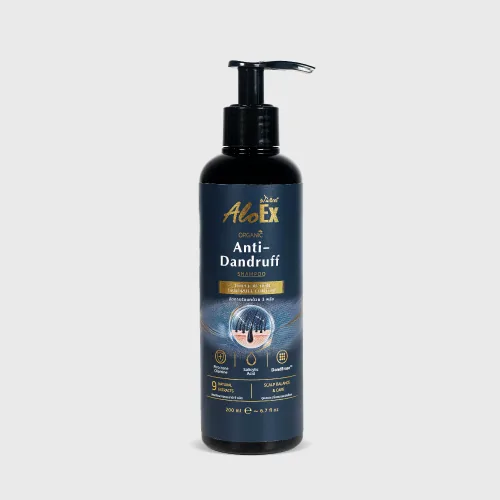
Step 1: Clear the yeast and the flakes with AloEx Organic Anti-Dandruff Shampoo
- Best for: days when dandruff is flaring and the scalp itches badly (use 2–3 times a week).
- How it works: it combines the world-class innovation DandErase™ (BSB Innovation Award 2025) with Piroctone Olamine, plus clinically tested natural herbal extracts such as lemongrass, to inhibit Malassezia at the source — while Salicylic Acid (BHA) and Lactic Acid (AHA) dissolve the biofilm shield and gently shed thick dandruff flakes.
- How to wash: massage into the scalp and leave for 3–5 minutes, so the clinical and organic actives can work fully.
Full ingredient list and test results on the AloEx Organic Anti-Dandruff Shampoo page.

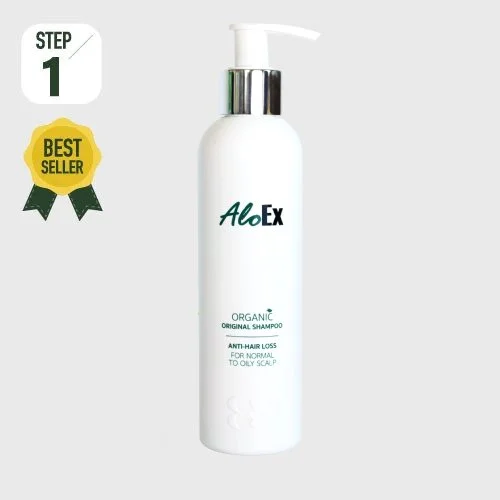
Step 2: Control the oil and hold the balance with AloEx Organic Original Shampoo
- Best for: ordinary wash days (alternating with the anti-dandruff formula). Suits anyone with an oily scalp who sweats easily and wants hair and scalp thoroughly clean.
- How it works: a gentle formula built on Thai herbs (Rhinacanthus nasutus, neem, pomegranate, siyakkai) acting as sebum control to keep down the excess oil the yeast feeds on, soothing inflammation and adding moisture to rebuild the scalp barrier.
- How to wash: use it for normal cleansing, to prevent the dry, tight scalp that comes from using a medicated anti-dandruff shampoo for too long, and to protect the good microbes in the scalp microbiome.
Full ingredient list and test results on the AloEx Organic Original Shampoo page.
Pro tip: why "alternating shampoos" beats using the anti-dandruff formula every day
Medically, using an anti-dandruff shampoo or an anti-fungal active every single day is not advised, because it can trigger the rebound effect — the body rushing out even more oil to compensate, until the dandruff flares harder. Building a routine that switches to an organic oil-control shampoo on the days when symptoms have settled is the correct way to protect the scalp's balance: it cleans away dirt and controls oil in just the right measure without irritating the skin, cutting off the yeast's food supply and strengthening the scalp barrier, so the chance of a return drops for good.

The alternating routine: the anti-dandruff formula on flare-up days, the gentle oil-control formula on ordinary days
Habits to stop, if you do not want dandruff to become chronic
- Stop scratching your scalp hard: however much it itches, digging in with your nails until the skin grazes risks a bacterial infection and weakens the hair roots — so on top of inflammation and dandruff, hair fall follows.
- Never sleep with wet hair: a pillow and damp hair are an ideal place for yeast and bacteria to grow. Always dry your hair completely before bed, on a cool or warm setting.
- Keep styling products away from the roots: gel, spray and wax should only go on the lengths, so the chemicals do not block the follicles on your scalp.
Pro tip: when it itches, do not use your nails
Dandruff usually comes with itching, and stopping yourself from scratching is hard — but scratching with your nails risks inflaming the scalp. Reaching for a silicone brush with soft bristles that can still get to the itch gently, like the AloEx Scalp Care Brush, deals with the itch precisely without leaving you with an inflamed scalp.
Frequently asked questions about dandruff
Can dandruff really cause hair loss?
Yes, but indirectly. Dandruff does not cause hair fall on its own, but the inflammation of the scalp and hard scratching damage the structure of the hair root, weakening the strand so it falls out more easily — and it can affect new growth too.
Can I use an anti-dandruff shampoo every single day?
Not recommended. Chemical anti-dandruff shampoos tend to be quite aggressive at stripping oil, and daily use can leave the scalp dry, tight and out of balance. Use it 2–3 times a week instead, or choose a highly gentle natural herbal anti-dandruff formula that can be used continuously without leaving hair dry and rough — such as AloEx Organic Anti-Dandruff Shampoo.
Are dandruff and seborrheic dermatitis the same thing?
Dandruff is considered the mildest early stage of seb derm (seborrheic dermatitis). With seb derm the symptoms are more severe: larger flakes, red patches, intense itching, and it can spread to other oily areas such as between the eyebrows, beside the nose or behind the ears. If you have those symptoms, see a dermatologist.
See the full side-by-side comparison in Dandruff, seb-derm or psoriasis? How to tell them apart.
In summary
Dandruff and chronic dandruff can be cared for and kept from returning long-term, if you understand the real causes — the yeast, the excess oil, and biological factors such as sex and age. Choose an anti-dandruff shampoo with ingredients that answer the problem, whether anti-fungal actives or natural herbal extracts with testing behind them, combine it with looking after your scalp health and correcting your habits, and that is enough to say goodbye to dandruff, get your confidence back, and keep a healthy scalp for the long run.