



Have you ever noticed that when looking closely at your hair, some spots seem to have 2–3 strands growing from the same pore? Many people wonder whether this is normal or a sign of a scalp problem.
In fact, this relates to an important structure called the Hair Follicle, and in many cases it is considered completely normal for the body.
What is a Hair Follicle? Why can one root have multiple hairs?
One root, but multiple hairs!? Which is "normal" and which is "abnormal"?
- Hair strands are similar in size
- Scalp is not red, itchy, or inflamed
- Overall hair is still thick and dense
- No curled, bent, misshaped, or abnormally soft strands
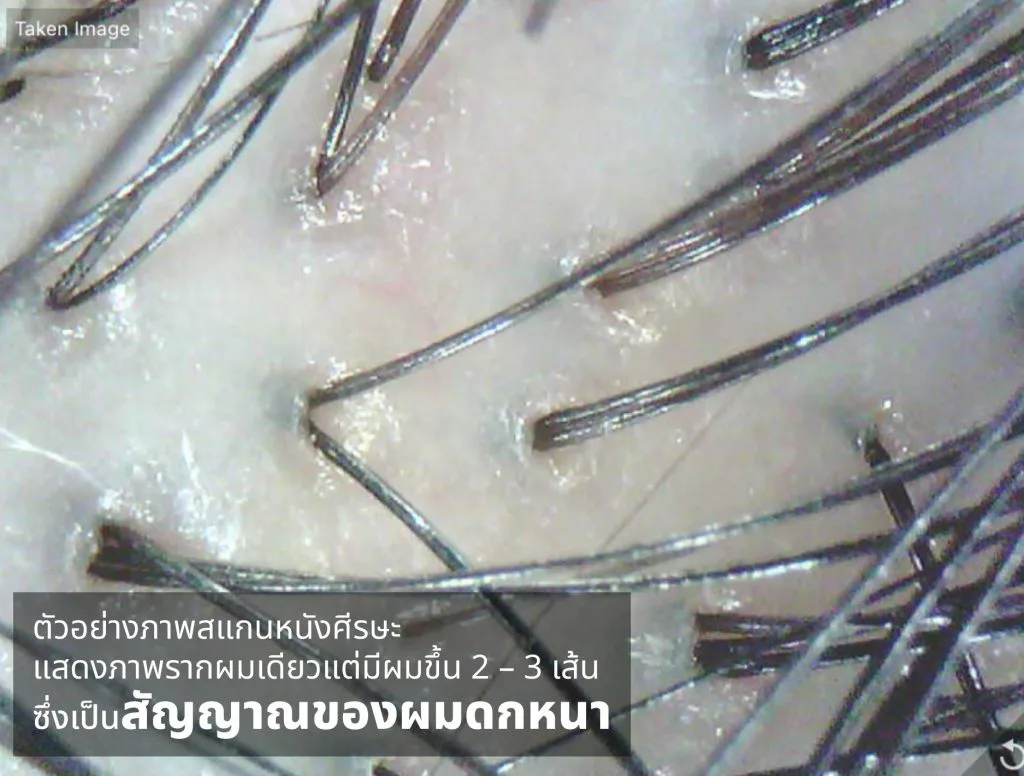
This is "abnormal" (should be cautious)
- Very thin strands mixed with thick strands, reflecting that some hair roots are shrinking — found in hereditary hair loss
- Itching, redness, and pain caused by inflammation of the hair follicle (Folliculitis)
- Stiff, rough, bent, twisted, tightly packed strands, known as the condition Pili multigemini
Causes of multiple hair strands growing from the same hair follicle
Natural hair follicle structure
One hair follicle pore does not always contain just one hair strand. In certain positions on the scalp, especially around the nape or crown area, there may be 2–3 strands sharing the same exit — this is normal anatomy for some individuals.
Hair Cycle Overlap
Each hair strand has its own life cycle at different times. Sometimes a new strand begins growing (Anagen) while the old strand has not yet fully shed (Telogen), making it look like multiple strands are coming from the same spot, when in fact they are at different stages of their growth cycle.
Genetic Variation
Genetics affects the number of hair strands per follicle. Some people naturally have thick hair because one Hair Follicle produces multiple strands. This explains why some people have dense hair without needing much nourishment.
Hair Follicle structure: the tiny hair-producing factory beneath the skin
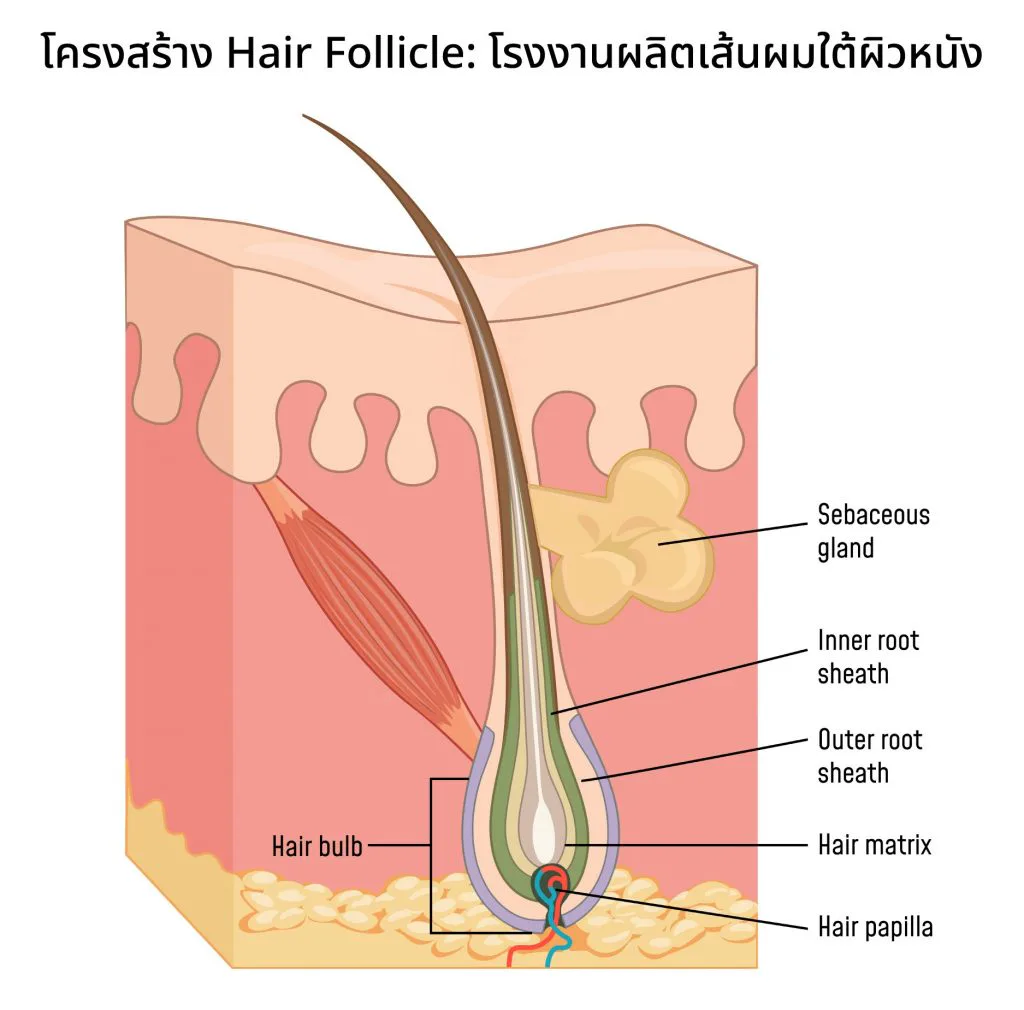
Hair Bulb
- Located deepest in the Hair Follicle — the point where hair begins to form
- Inside are rapidly dividing cells that create the new hair shaft
- If this part is weak, hair will grow slowly, strands will be thin, and hair will fall easily
Dermal Papilla
- Located at the base of the Hair Bulb
- Responsible for delivering blood, oxygen, and nutrients to the hair root
- Is the center for receiving hormonal signals, such as DHT that affects hereditary hair thinning
- If this part shrinks, hair strands will become thin and flat
Matrix Cells
- Located around the Dermal Papilla — stem cells that divide and push upward to form hair
- The strength of these cells determines the thickness and quality of hair
- If this part is weak, hair will grow slowly and become thinner
Outer & Inner Root Sheath
- The sheath layer that surrounds the hair, closest to the hair shaft
- Functions to support the hair and control the direction of growth
- If there is inflammation in this area, pain, itching, or hair loss from weakened roots may occur
Sebaceous Gland
- An oil-producing gland (Sebum) connected to the Hair Follicle
- If it overproduces, it will cause oily hair and may clog hair roots
Whether hair will be thick or not depends on the health of the Hair Follicle
For those with thick-looking hair, this may be because they have more Hair Follicles than others, or because one Hair Follicle pore can produce more than one hair strand. Therefore, whether our hair looks thick or not depends on the health of our Hair Follicles. This means that when caring for hair health, one should care from the root, because when the structure of the Hair Follicle is imbalanced, problems that cause hair fall and thinning will follow.
What happens when the Hair Follicle structure is imbalanced?- Dermal papilla shrinks → hair strands become thinner, hair begins to flatten
- Matrix cells function decreases → hair grows slowly
- Sebaceous gland overworks → oily hair, clogging
- Inflammation around the root sheath → hair falls easily
Popular active ingredients that help nourish the Hair Follicle — the thick hair-producing factory
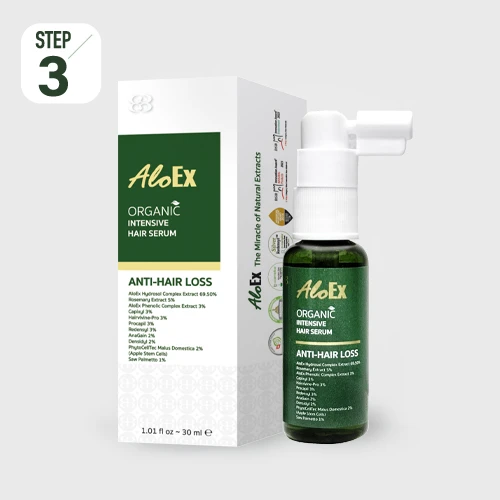
Now that we know the path to thick hair, farewell hair loss, and healthy scalp lies in nourishing from the root — which has always been AloEx's sustainable hair care philosophy — today we would like to compile the top Active Ingredients that help nourish hair from the root, making our Hair Follicle structure strong enough to produce a dense, strong Follicular Unit. These active ingredients are also key components of AloEx's hair care products.
- Stimulates the stem cells of the Hair Follicle to enter the growth phase (Anagen)
- Helps increase the number of hair strands, making hair look thicker
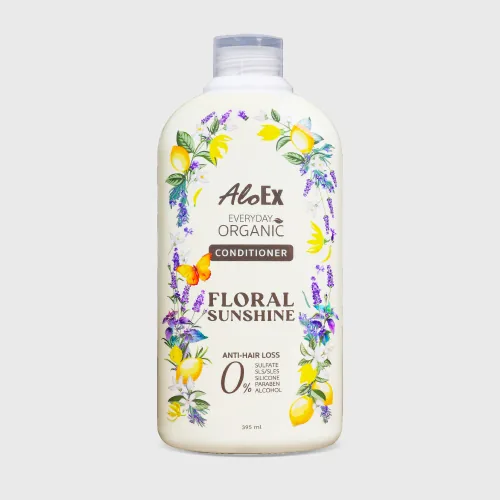
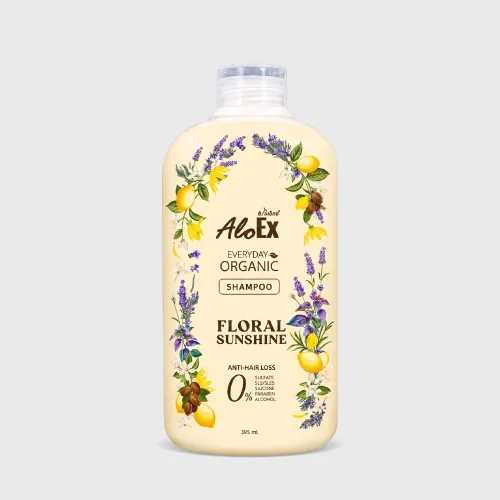
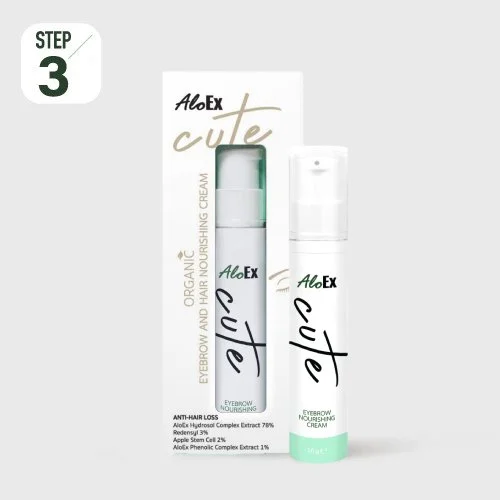
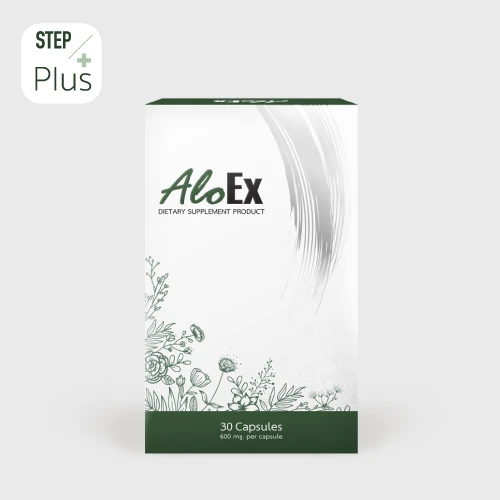
AloEx products containing Redensyl™
- Inhibits the 5α-Reductase enzyme — the cause of DHT that leads to hereditary hair loss
- Increases blood circulation to the scalp
- Reduces fibrosis around hair roots, or reduces the accumulation of collagen around hair roots — similar to fibrous tissue constricting the hair roots — which impairs blood circulation
- Helps protect hair roots from shrinking, so newly grown hair is thick and strong
AloEx products containing Procapil™
- Rich in Biochanin A, which helps inhibit the 5α-Reductase enzyme, thereby reducing hair loss from DHT
- Contains Peptide to help maintain the structure of hair roots, making them strong and reducing inflammation around the Hair Follicle
AloEx products that contain Capixyl™ as an ingredient
AloEx Hydrosol Complex Extracts & AloEx Phenolic Complex Extracts
- Herbal extracts produced by AloEx's proprietary extraction method
- Tested by the Thailand Institute of Scientific and Technological Research (TISTR) Confirmed to inhibit the 5α-Reductase enzyme — the cause of hair loss due to DHT hormone — effectively
All AloEx products contain AloEx Hydrosol Complex Extracts & AloEx Phenolic Complex Extracts as ingredients
- Inhibits the 5α-Reductase enzyme, helping to reduce hair loss from DHT
- Suitable for those with sensitive skin
AloEx products containing Saw Palmetto as an ingredient
- Extends the lifespan of hair roots
- Accelerates the growth of hair roots
- Extends the lifespan of hair in the growth phase (Anagen)
AloEx products that contain PhytoCellTec™ Malus Domestica as an ingredient
Indirect Hair Follicle nourishment — soothing the scalp and reducing inflammation
In addition to directly nourishing the Hair Follicle, using extracts that help soothe the scalp and reduce inflammation also indirectly nourishes the Hair Follicle. Because maintaining the environment of the Hair Follicle is considered preparing a good environment for strong Hair Follicle structure, and many natural extracts that are key ingredients of AloEx also have this nourishing effect. The extracts that will be mentioned are key components in every AloEx hair and scalp nourishing product.
Centella asiatica
- Balance the scalp
- Soothe and reduce inflammation of the scalp
Aloe vera
- Reduce scalp inflammation.
- Maintain the moisture balance of the scalp
- Antioxidant
Phaya Yo
- Reduce scalp inflammation.
- Antifungal and antibacterial
- Antioxidant
Branch Candle
- Reduce scalp inflammation.
- Antifungal and antibacterial
- Antioxidant
Summary: Having multiple hair strands in one pore is not abnormal — quite the opposite, in fact — as it is a sign that the Hair Follicle is working well to produce hair, making hair look thick and dense. But if you start to see thinner hair strands or hair roots that are not strong, directly supplementing nutrients to the Hair Follicle is the solution. Choosing to use AloEx's hair and scalp nourishing products is another way to help nourish the Hair Follicle to be strong.